

By Rafael Martinez
Stepping into the IMSA Michelin Pilot Challenge this season with the RAFA Racing Team has been one of the biggest leaps in my racing journey so far.
Coming from Porsche Sprint Challenge and a mix of GT4 races, I knew this was going to be a new level. The field is deeper, the races are longer, and the intensity is real.
One of the first things I’ve had to adapt to is the mixed-class racing. With TCR cars sharing the track, I’ve often found myself fighting off those guys as I chase the GT4 competition, which has been an unexpected challenge.
But every race in the Toyota GAZOO Racing GR Supra GT4 EVO2, I’m getting more comfortable in traffic, more consistent with lap pace, and just generally more confident behind the wheel.
Looking back to where I was at Daytona and where I’m at now—Mid-Ohio, Watkins Glen, and even here at Mosport—it’s clear the gap to the front is shrinking.
That alone is motivation enough to keep grinding. I’m learning a ton—this is totally different from what I did in Europe last year, and even different from what I experienced in Sprint Challenge. It’s been a steep curve, but a rewarding one.

That said, I’ve also had to jump into a lot of tracks I’d never been to, often with little or no testing beforehand. At Daytona, for example, I hadn’t turned a single lap in our car before the event. Same for Watkins Glen and Mosport. Sebring was one of the few where we got a test in. That kind of learning on the fly forces you to focus and absorb quickly.
The races themselves are also way longer than I’m used to—two hours instead of the 40-45 minute sprints.
That’s brought in a whole new element of strategy and endurance. When do we pit? How do we manage traffic over a stint? What’s the best way to deal with safety car timing? These are questions I’ve had to work through in real time.
And honestly, we’ve had some tough breaks. At Daytona, we were on track for a P2 but got hit with a penalty for missing minimum drive time by just a few seconds—ended up last in class. At Watkins, a poorly timed safety car completely flipped our race and took us out of contention for a potential win.
And at Mid-Ohio, where I think I drove my best race of the year, we were in position to win the Bronze Cup… and the car caught fire.
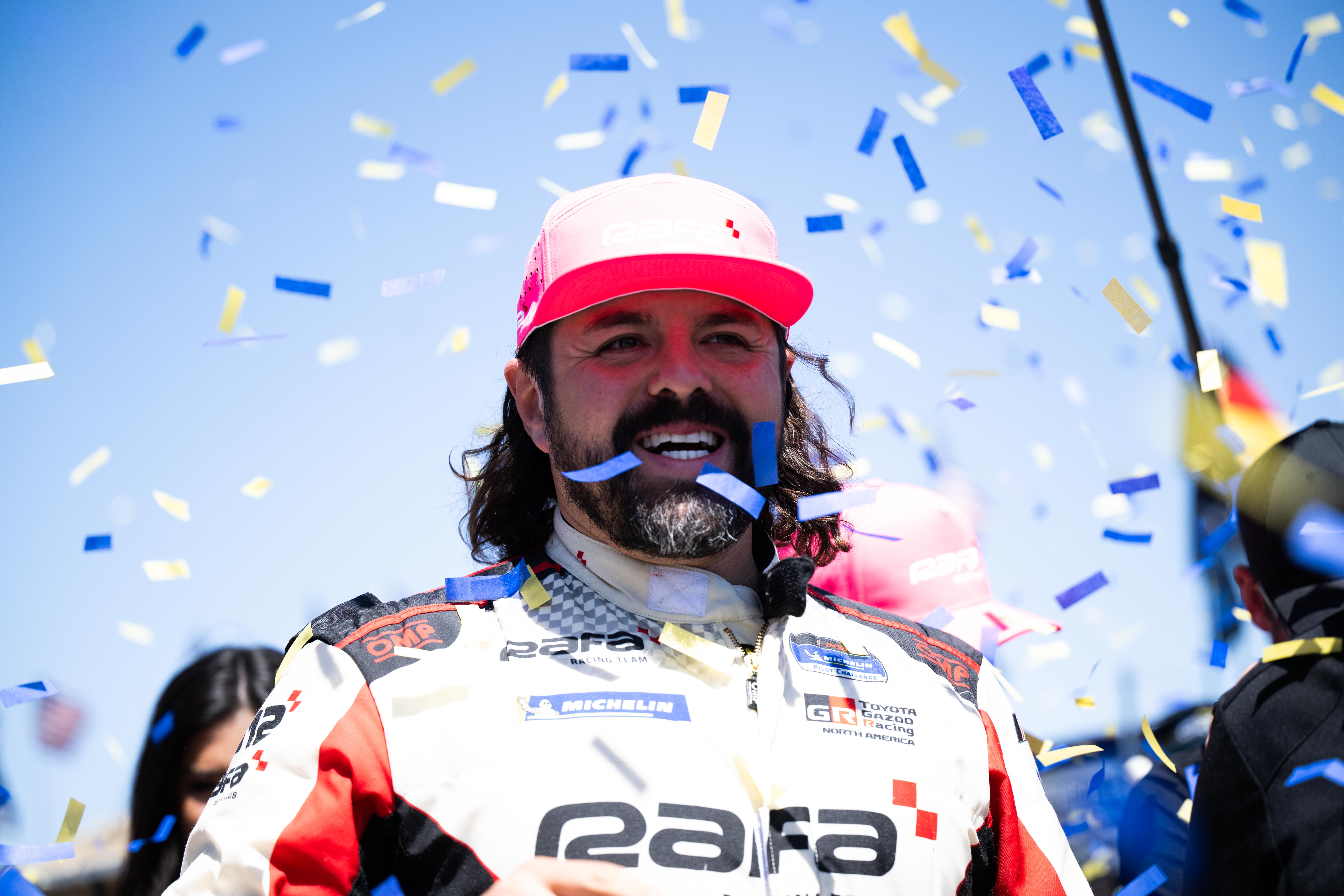
Despite all that, I’m really proud of the progress we’ve made – especially the win at WeatherTech Raceway Laguna Seca. The car has been strong and reliable for the most part, and even with limited testing, I feel like I’m coming into my own. I’ve still got a long way to go, but I’m excited for the rest of the season and hungry for more.

One of the biggest parts of this year has been working with my co-driver, Jim Jonsin. He’s got a ton of experience, including in this series back before it was even called Michelin Pilot.
While some of the tracks have changed since he last raced them, he still brings a lot to the table. It’s been a cool dynamic—we’ve had to push and adapt together. He’s often quicker in qualifying or early sessions, but we’re both learning how to balance things and bring the best out of each other.
There’s a real mutual respect there. We both want to grow, both want to make an impact on and off the track, and both understand that this is a team sport through and through. Whether one of us has a rough session or nails it, we’re there to support each other.
Driver changes and pit strategy have also been an evolving part of the equation. Early on, the goal was sometimes just to get me out of the car quickly and minimize risk.
But now, we’re working to make sure I can run a full hour and keep us on strategy with the rest of the field. If I’m up to pace, we can fight for wins. That was the difference at Watkins—had I stayed out just two more laps before the safety car, we likely would’ve won.
What’s made a huge difference this year has been the team infrastructure behind us. Kevin Conway and the crew know these RAFA Racing Team Toyotas inside and out, and that gives Jim and I so much confidence every time we go out. Whether it’s setup work, pit execution, or mechanical reliability, they’re locked in.

And we’re lucky to have teammates like Kiko Porto and Ian Porter to lean on. Even though we all have different driving styles, they’re fast and consistent—and when we’re able to overlay our data with theirs, it helps us massively.
When Ian goes out and throws down a 1:22.5 in his first session at Canadian Tire Motorsport Park, and we’re still working through our lines, it gives us something real to chase.
Having a full program with multiple RAFA Racing Team cars running in multiple series has been a real strength. Whether it’s the Michelin Pilot Challenge, VP Challenge, Super Trofeo, or our other entries in SRO, we’re collecting data, building experience, and getting better across the board.
And from the broader team perspective, I couldn’t be more proud of what we’re doing. To show up in IMSA and be competitive right out of the gate—against teams who’ve been running these cars and this level for years—that’s a huge achievement.
People didn’t know our names before we came into this, and now we’re winning races and putting cars on the podium.
The development pathway we’ve built—from fitness and wellness to sim prep and track support—is all designed to set us up for success. It’s working.
Our win and podium percentages are over 50% across more than 100 races. That’s no accident. It’s a result of the hard work that goes in every day from everyone in the program.
There’s still a lot of season left. We’ve had a bit of bad luck, sure—but we’ve also shown we belong. And that’s what keeps me pushing every weekend. I know we’re just getting started.


